
THIS PROJECT IS CURRENTLY BEING UPDATED
PLEASE DISREGARD ANYTHING THAT MIGHT NOT MAKE SENSE
THANKS

In 2020, I conducted a comprehensive study of the autonomous vehicle industry and developed concept designs for both application interfaces and vehicle dashboard systems. While extensive UX research and guidelines existed for mobile and desktop platforms, establishing clear Human-Machine Interaction (HMI) principles for automotive applications proved significantly more challenging due to the absence of standardized industry guidelines at the time.
Role: UI/UX Designer, Researcher
At the time of this study, there were no applications that allowed users to summon an autonomous vehicle to pick you up regardless of location or time. However, by 2025, it is well known that numerous such services now exist.
This is a rendition of the study that I did at the time.

Why are we not there yet?
First, we found some of the fundamental challenges were not allowing us to get there, some of which are still are keeping us from getting to full autonomy.

Safety
Computers are not programmed to deal with uncertainty and despite programmers’ best efforts, there’s still a fundamental problem: cars and people don’t speak the same language. There is too much uncertainty with human driving.

Affordability
A challenge of building a self driving car is building an affordable system that the average person will be willing to buy. The systems underlying sensors, radars, cameras and communication devices, are costly compared to older vehicles.

Machine Learning
Programing for safety and practicality often conflict with each other. Programing for the multitude of scenarios that can arise while driving is an insanely difficult task because humans don’t follow the rules of the road perfectly.
Second, we found that Americans still don’t trust driverless cars.
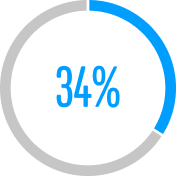
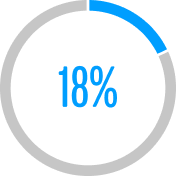
Nearly 3 in 4 Americans say autonomous vehicle technology “is not ready for primetime.”
Reuters/Ipsos poll 2020
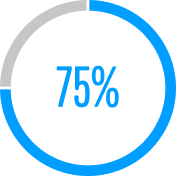
of Americans say autonomous vehicle technology is not ready for primetime.
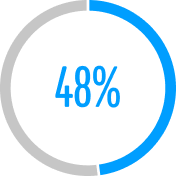
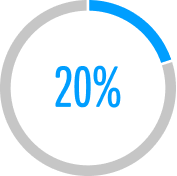

Third, we have not reached the full autonomy phase yet.
The Society for Automotive Engineers (SAE) puts the evolution of self-driving vehicles into five categories: from Level 1, which is totally manual, to Level 5, where the vehicle is fully capable of driving itself without human input.
Level 2 systems currently on the market include the Tesla Autopilot, Cadillac Super Cruise, Mercedes-Benz Drive Pilot, and Volvo Pilot Assist. In 2020 the only vehicle on the market with level 3 autonomous technology presently available to consumers was the Audi A8, although other automakers are working to develop this type of vehicle for release in 2020. As far as level 4 and level 5, no cars are currently on the market at this level for consumer purchase.

No Automation
Zero autonomy. The driver performs all driving tasks such as steering, accelerating, and braking. These vehicles are older models.

Driver Assistance
The vehicle during this time is controlled by the driver, but some driving assistance features like cruise control may be included.

Partial Automation
The vehicle during this phase can perform steering and acceleration but the driver still monitors all tasks and can take over at any time.

Conditional Automation

High Automation

Full Automation
The vehicle can perform all driving tasks under all conditions. Zero human attention or interaction is required at all.
Here are some of the top autonomous vehicle manufacturers in 2020
Self-driving car research has cost over $18 billion. Waymo has spent the most, with an estimated $3.5 billion used to finance its R&D.
“While self-driving technology is maturing quickly, realizing its benefits – particularly for those who need it most – requires that the technology be affordable. This prospect is, in our view, far from certain. Leaving this issue unaddressed risks fostering greater socioeconomic inequality on the nation’s roads.”
Harvard Business Review by Ashley Nunes and Kristen Hernandez
January 31, 2019


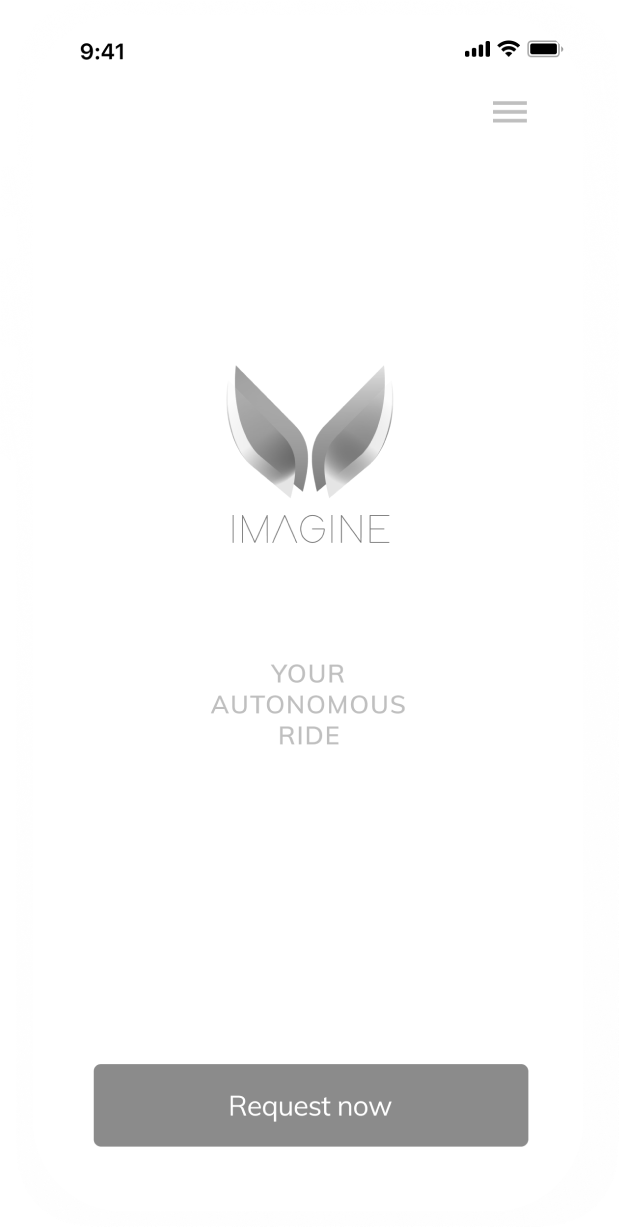
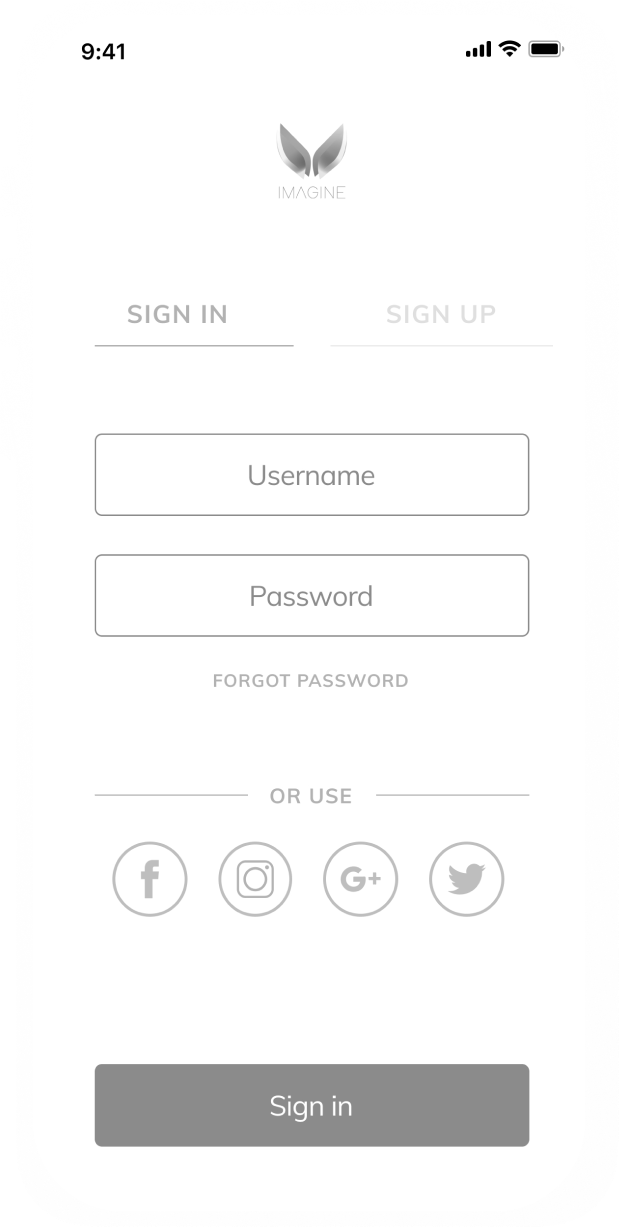
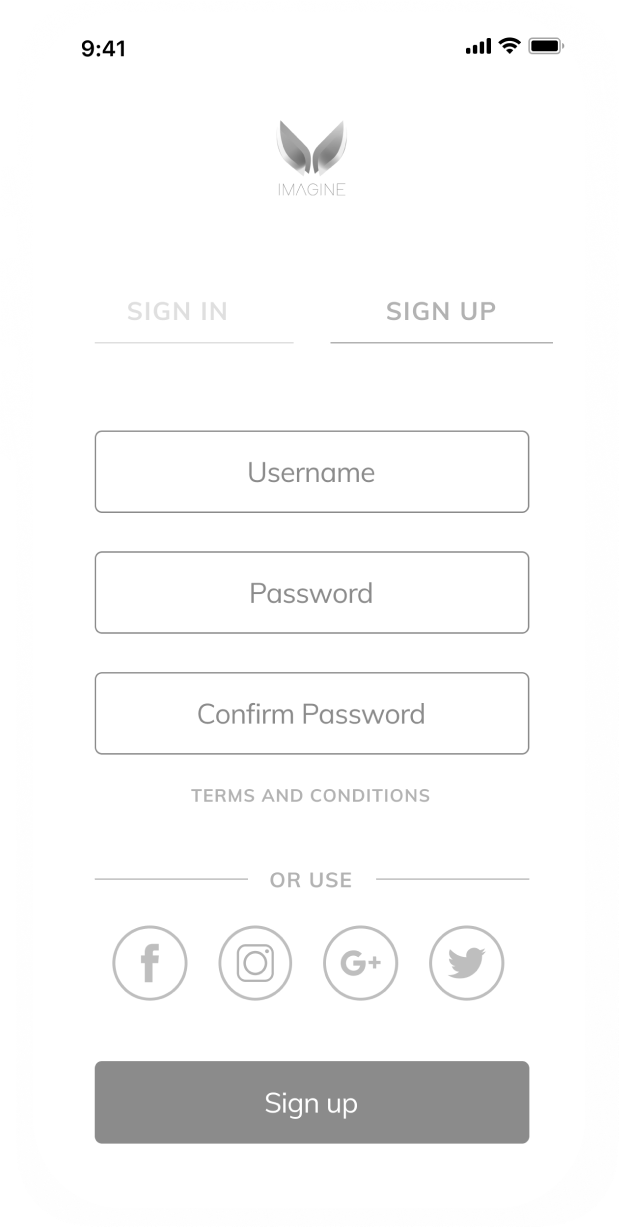
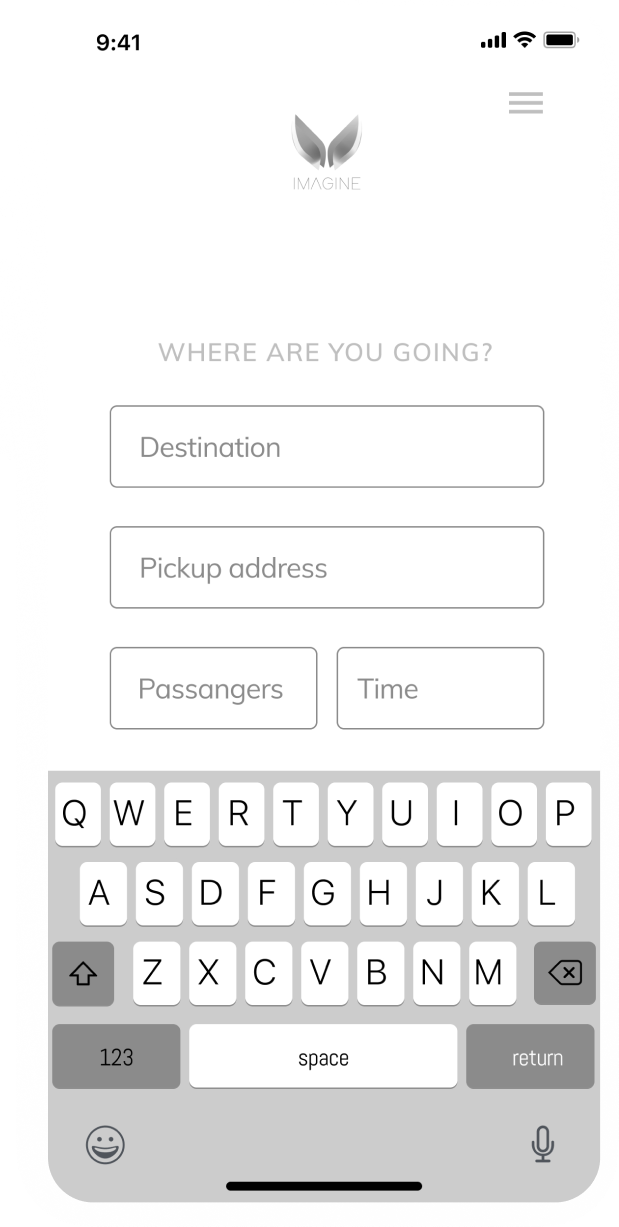
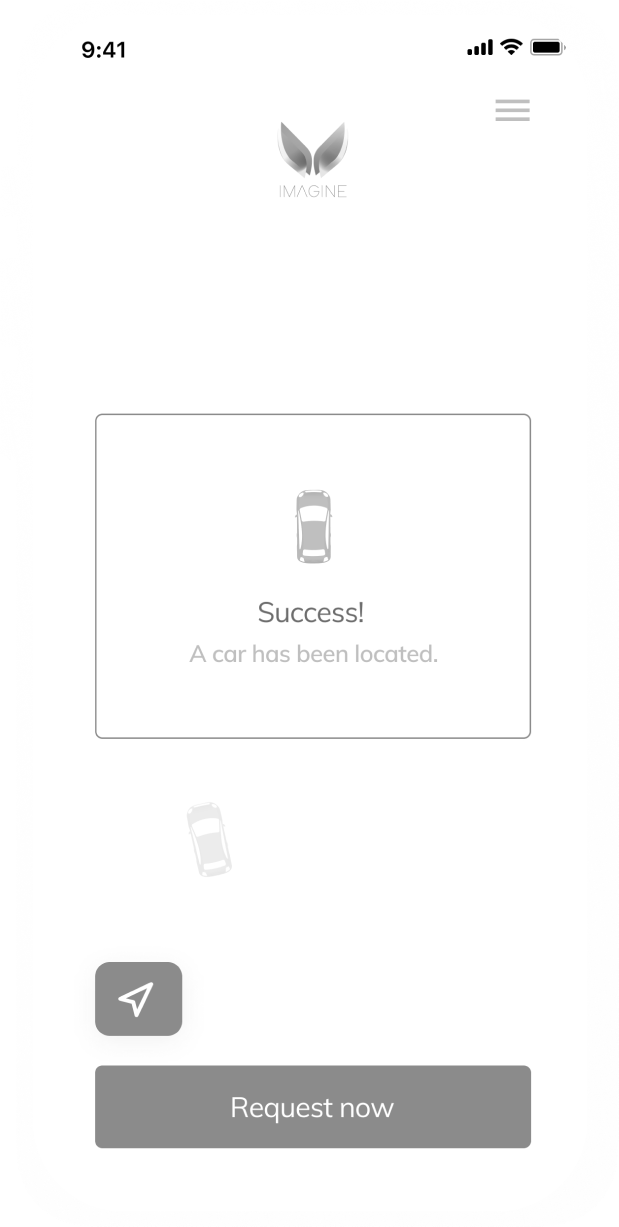
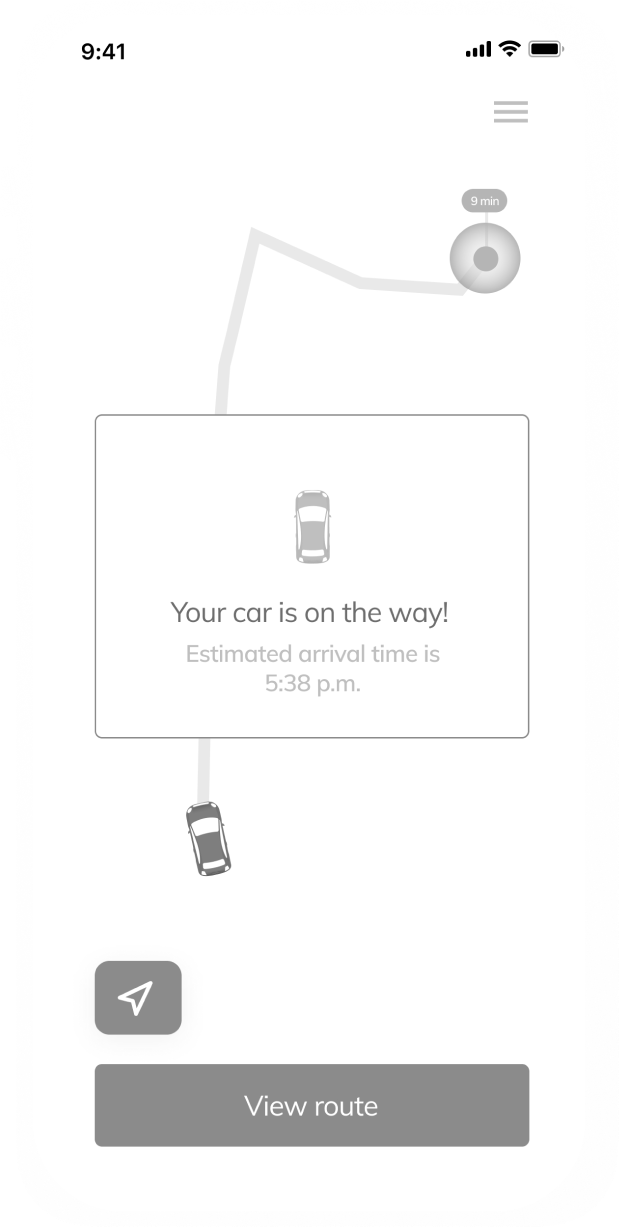
Wireframes
Color Treatment
Purple is the color of sophistication and wisdom. That’s why many educational firms and tech companies use violet shades. Purple is also the color of spiritualism, supernatural, and imagination and is also associated with royalty, fantasy, and flowers. Since this project is about transportation discovery and finding the best user experience design, I thought these variations of purples and greys would work well with our purpose.

Icons
I went with solid icons as a treatment a they are are generally faster and easier to recognize than line icons, particularly when representing real-world objects. This is because solid icons offer less visual noise making the easier to read.

UI Screens
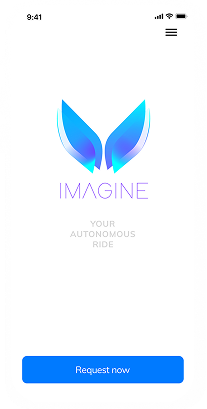
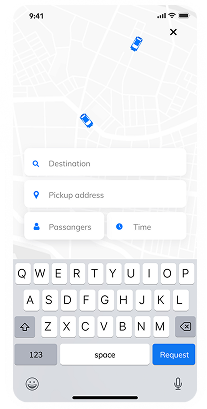
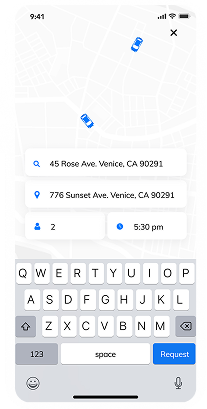
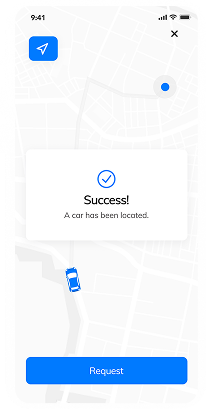
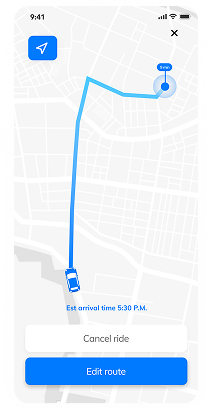
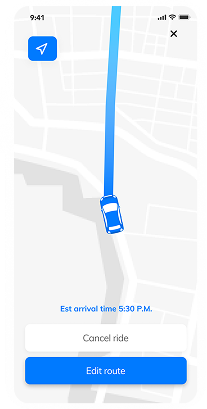
And now, imagine your own autonomous vehicle that will take you anywhere you want, whenever you want. Five years ago, this was a pipe dream, but as we know today, it’s not.
To be continued… please tune back for more.